



Waste

Electricity

Heat

Fertiliser

Carbon Offset
Circular marketing to attract buyers
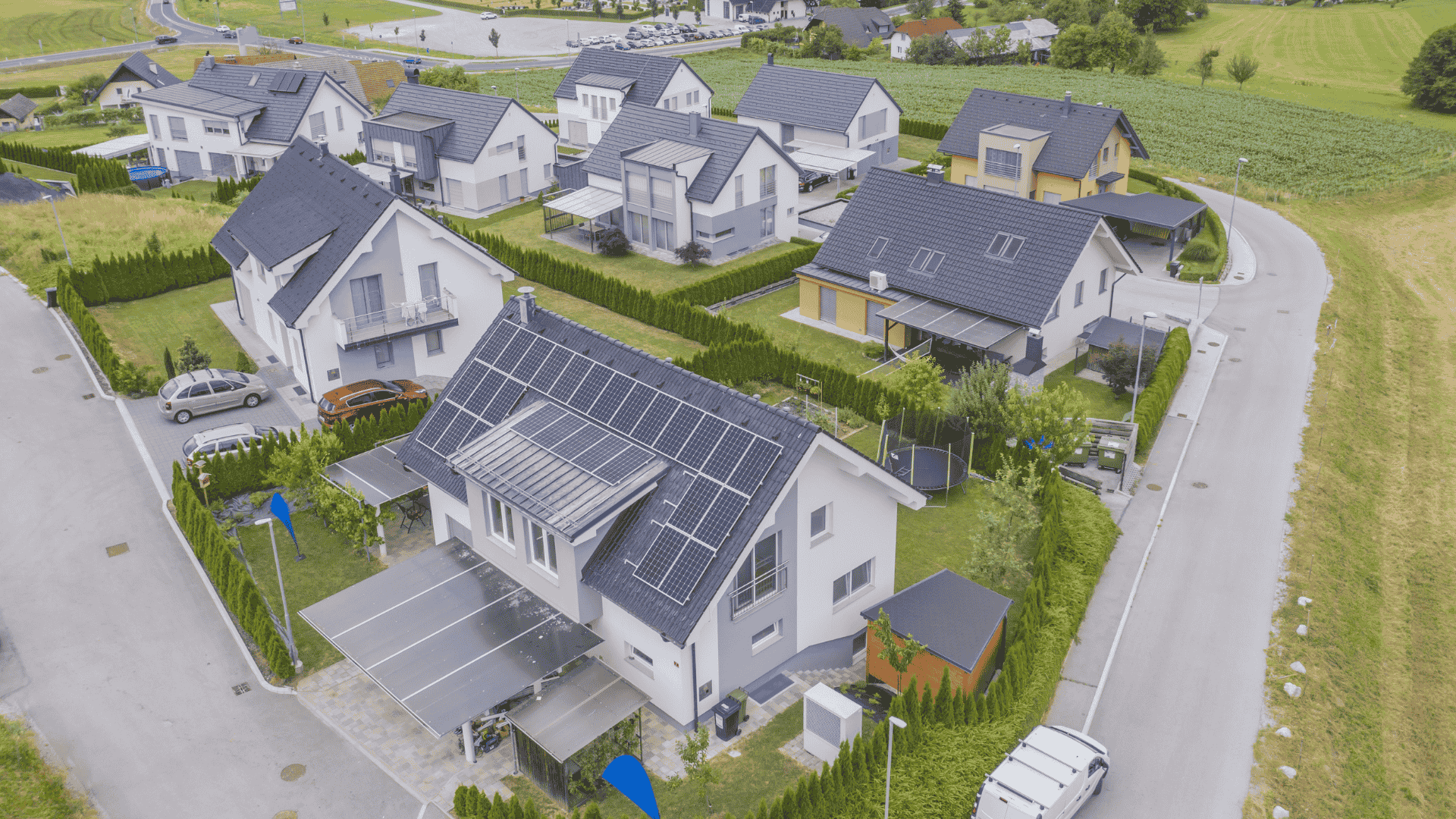
Property developers can integrate Flexibuster units into master-planned communities to create a closed-loop energy and waste ecosystem. Organic household waste becomes renewable energy for communal heating, EV charging, or shared facilities, reinforcing a self-sufficient neighbourhood identity.
The circular infrastructure becomes a differentiating marketing asset. Buyers increasingly prioritise sustainable living; showcasing onsite waste-to-energy dramatically enhances green credentials and supports premium property positioning.
Over time, the system reduces waste collection logistics and associated emissions, improving community air quality and lowering service costs. Developers position the project as future-proofed infrastructure aligned with evolving building regulations and climate commitments.
Organic waste treated on site | 3,300 t/yr |
Grid electricity displaced (Scope 2) | 520 MWh/yr |
Fossil heat displaced (Scope 1) | 650 MWh/yr |
Digestate produced | 2,500 t/yr |
Estimated GHG reductions: | 1,050 tCO₂e/yr |
Indicative credit potential | up to ~1,050 VERs/yr |
Scope attribution | Primarily Scope 3 (community waste diversion), with Scope 2 and Scope 1 energy benefits |
“Shimizu Corporation is partnering with UK-based SEaB Energy to deploy innovative, containerized anaerobic digestion systems (Flexibuster™ and Muckbuster™) that convert organic waste into on-site energy, heat, and fertilizer. This collaboration aims to advance Shimizu’s “Vision of 2030” for sustainability and net-zero buildings by reducing CO2 emissions and waste. “Our focus on sustainability is strong, especially in Southeast Asia where we have a long history in construction. We were therefore delighted explore the solutions on offer in the UK-APAC Tech Growth Programme’s reverse pitch.”